
The problem
A lot of useful gear — a drone, a good camera, a power tool — gets bought for one project and then sits in a closet. The people who need that same gear for a weekend don’t want to buy it; they want to borrow it from someone nearby. There was no clean, trusted way to put those two people together.
What we built
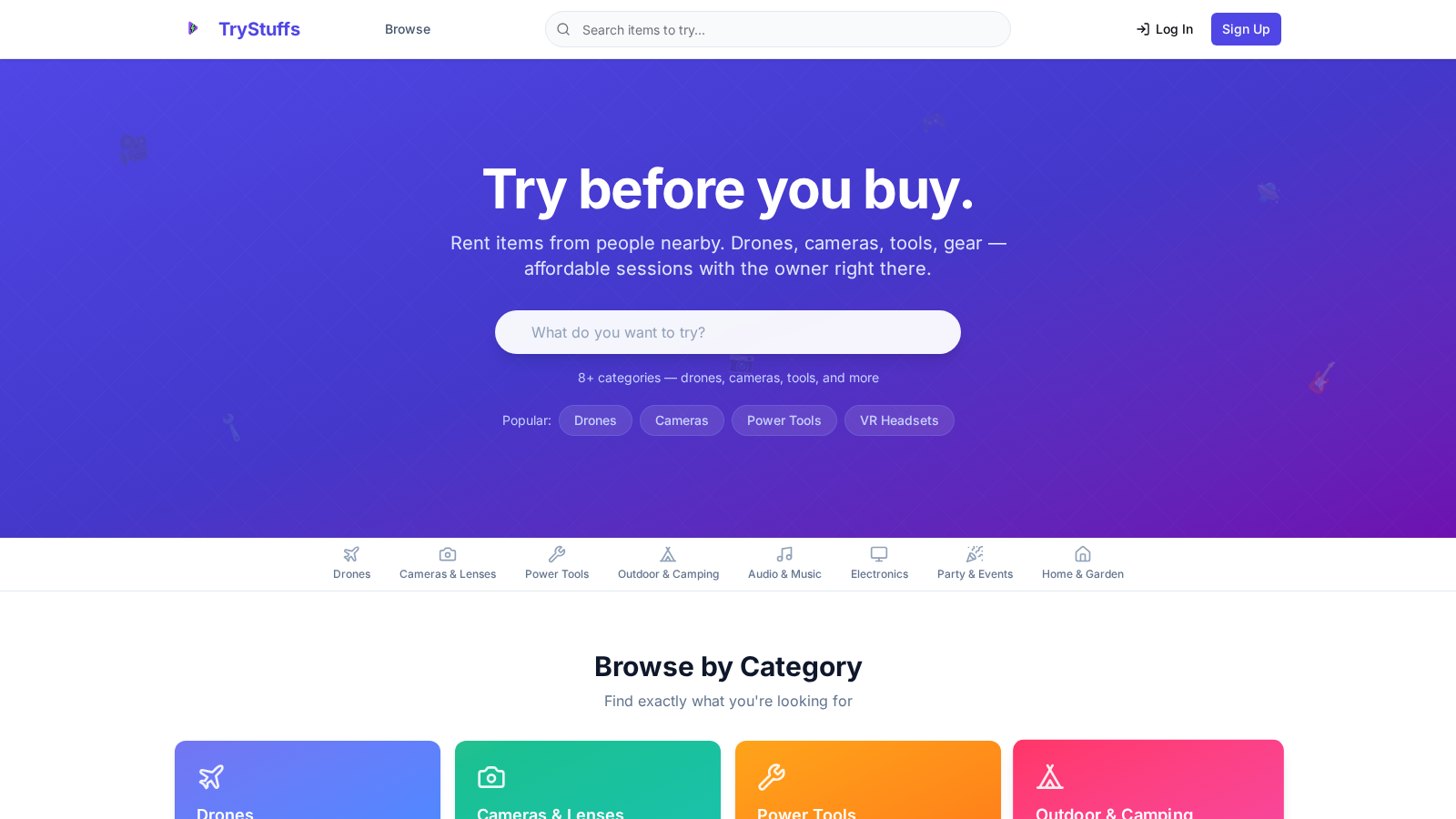
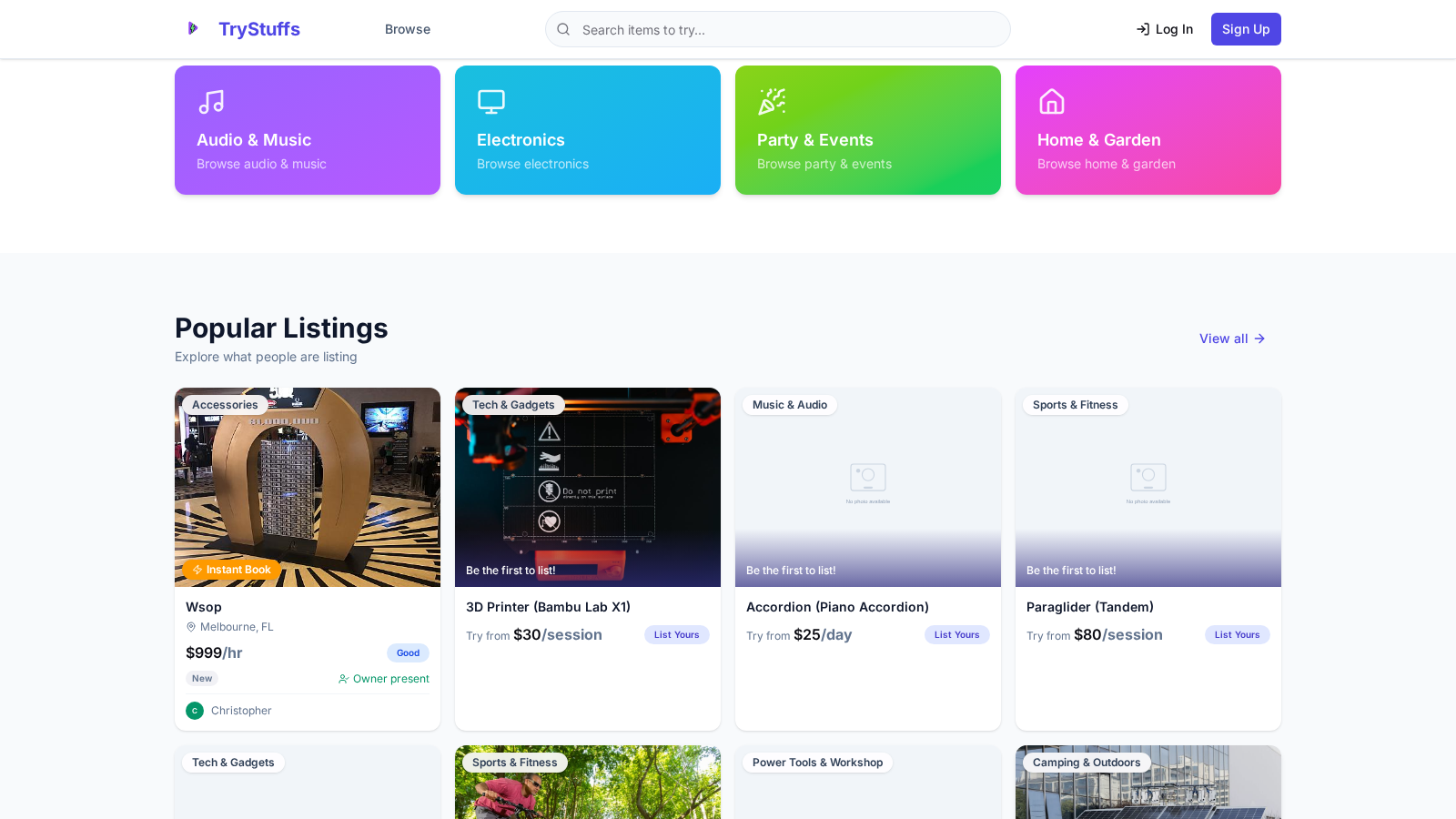
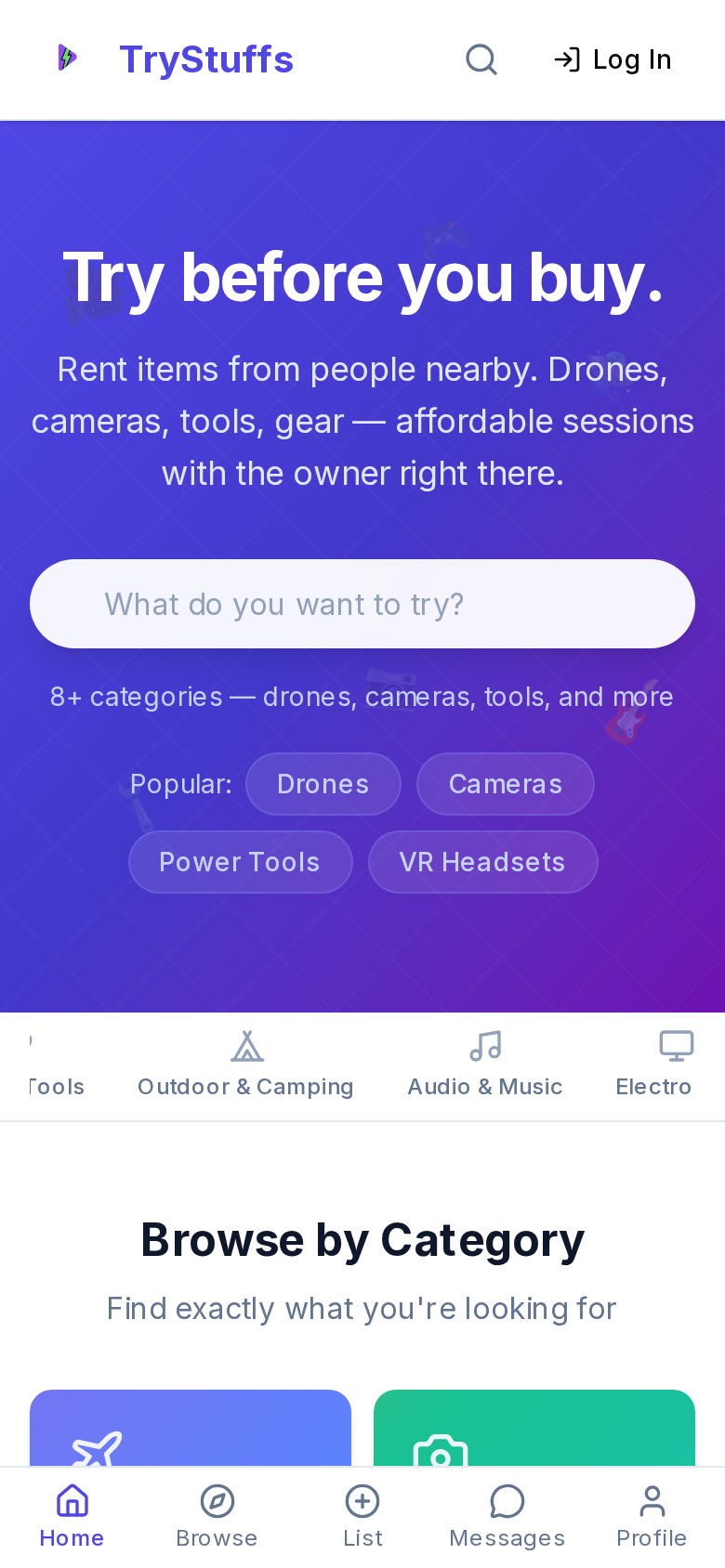
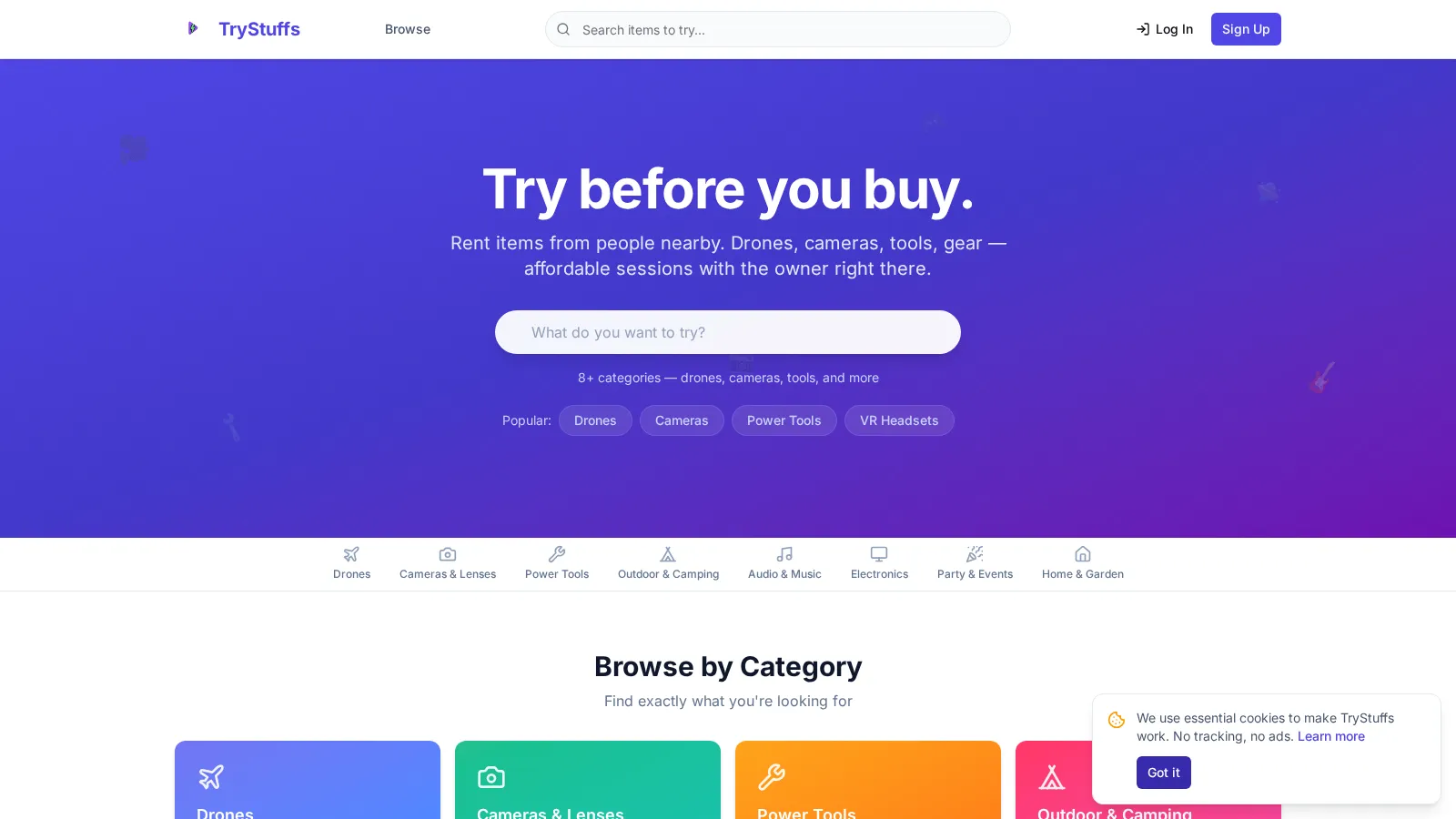
TryStuffs is a peer-to-peer rental marketplace. Owners list gear — drones, cameras and lenses, power tools, outdoor and camping kit, electronics — and set an hourly rate. Renters browse by category, find something nearby, and book a session. The owner is right there at handoff, which is the trust model the whole thing is built on.
It’s a genuine two-sided marketplace: a public catalog with popular and most-wanted listings, a booking flow, and an owner side that turns idle gear into income. Stripe runs the money — per booking, no monthly platform fee on either side. The trust pieces — secure payments, in-person handoff, fair pricing — are first-class, not bolt-ons.
How we shipped it
Built end-to-end — listings, search by category, the booking flow, owner payouts, and the trust-and-safety surface. The marketplace runs on Laravel with Inertia + React on the front end — server-driven where it should be, interactive where it needs to be. Stripe handles payments per transaction, so neither side pays SaaS rent to use the marketplace.
Outcome
TryStuffs is live as a working marketplace: owners list, renters book, money moves through Stripe per booking, and gear that used to sit in a closet earns instead. The code and the infrastructure stay owned — no marketplace platform taking a cut on top.