
The problem
Staying in touch with someone who’s incarcerated is harder than it should be. Families lose contact over a move or a transfer, and people on the inside can go months without a single letter. The sites that promise to help are mostly cluttered, dated, and quietly built to extract fees for every message. What was missing was something plain and honest: a place to find a person, read who they are, and write to them directly.
What we built
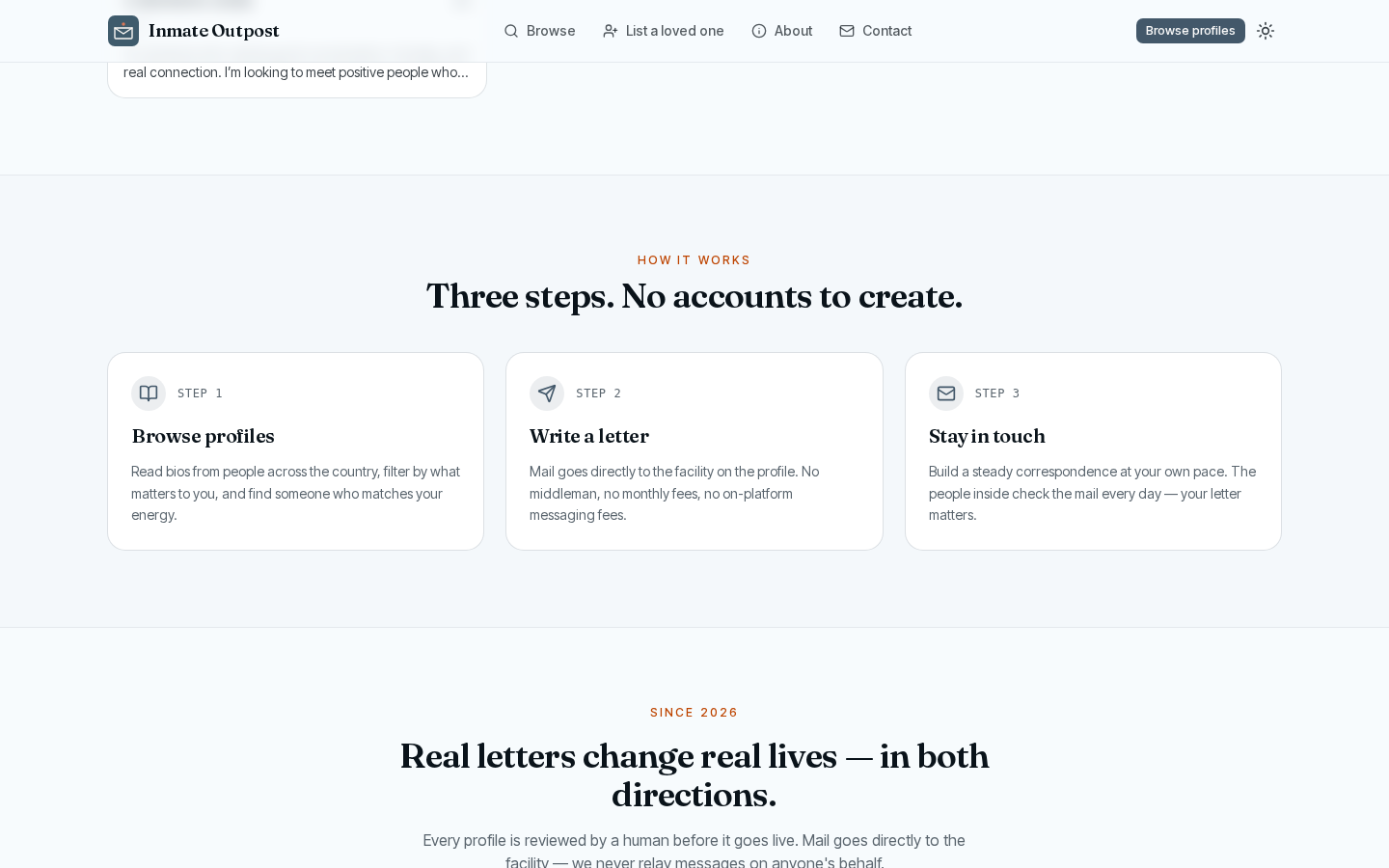
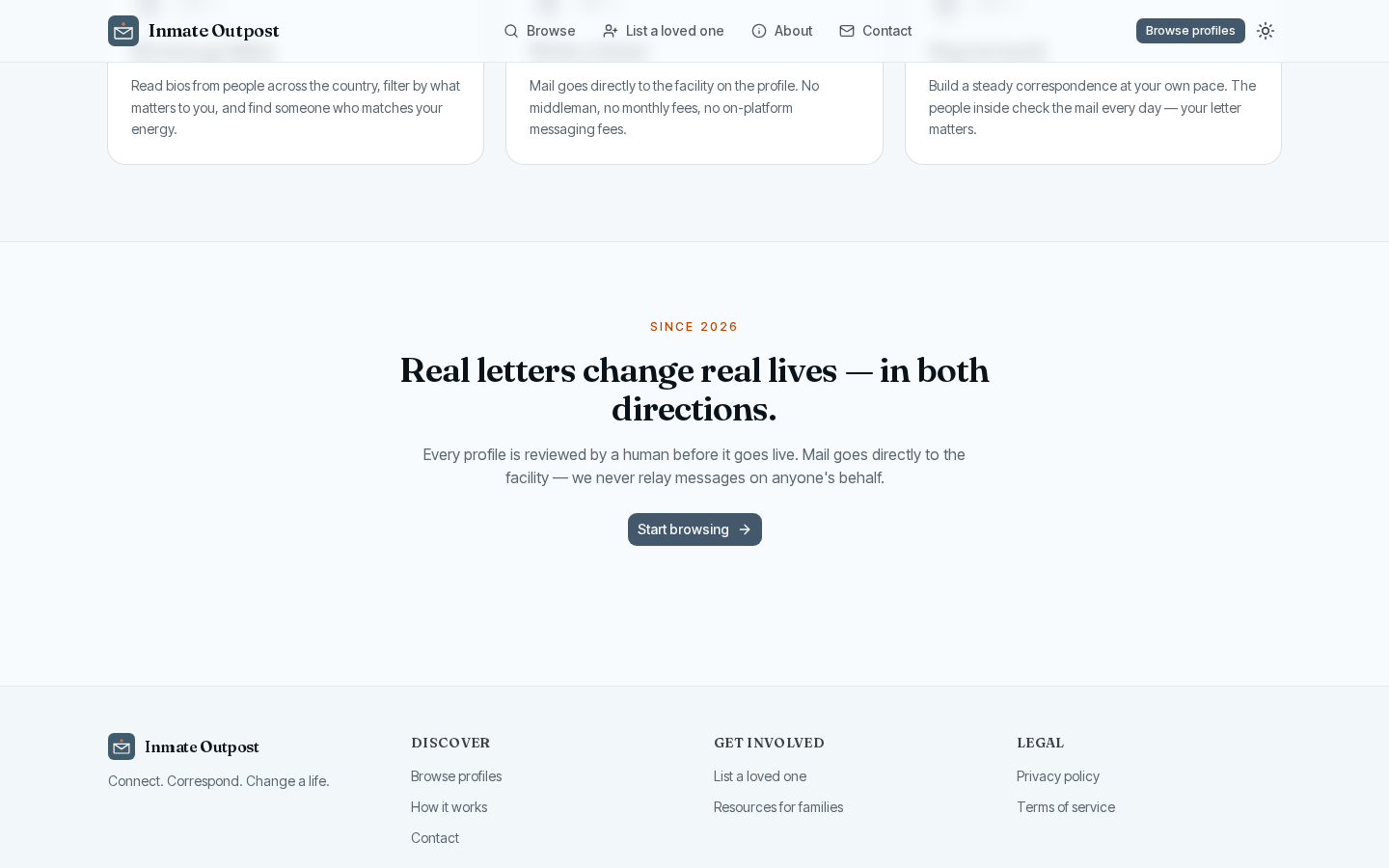
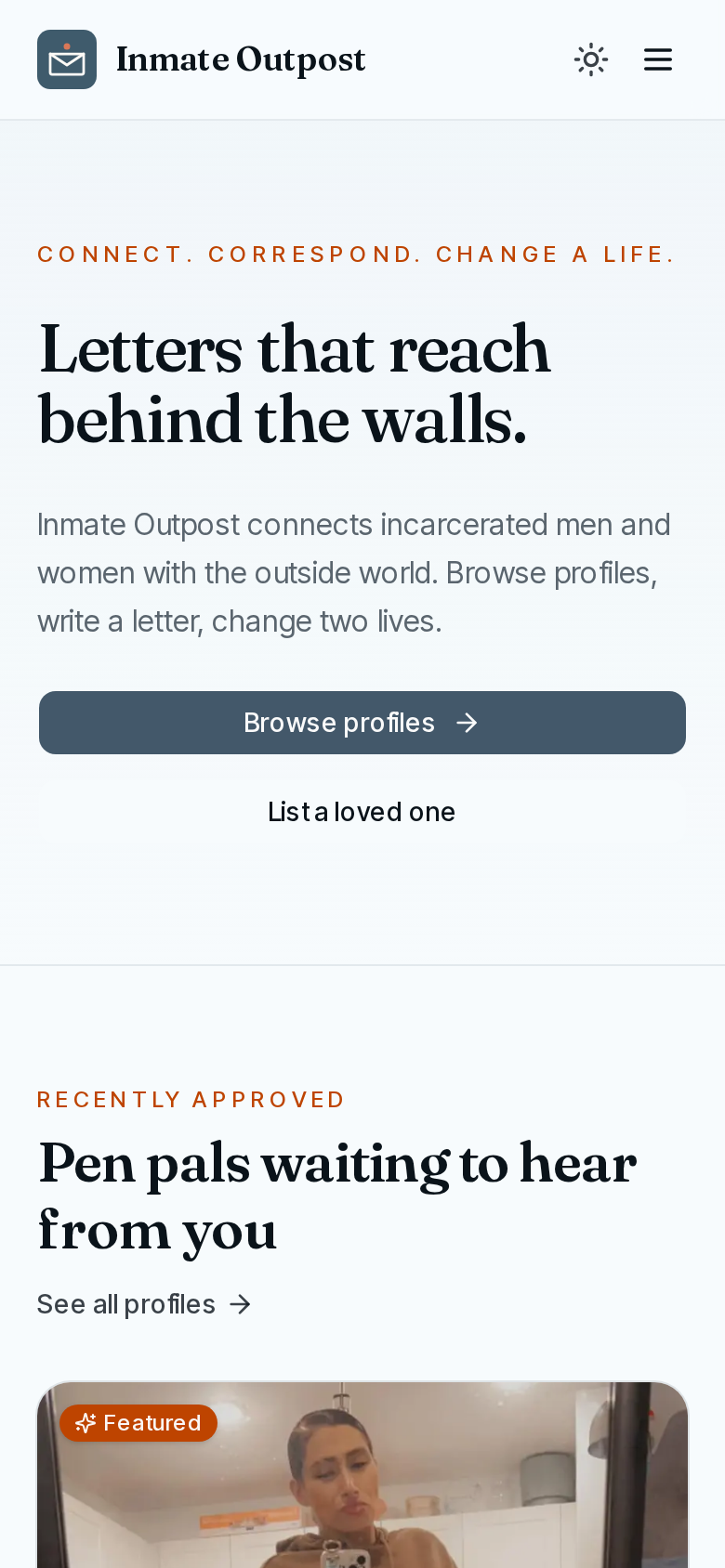
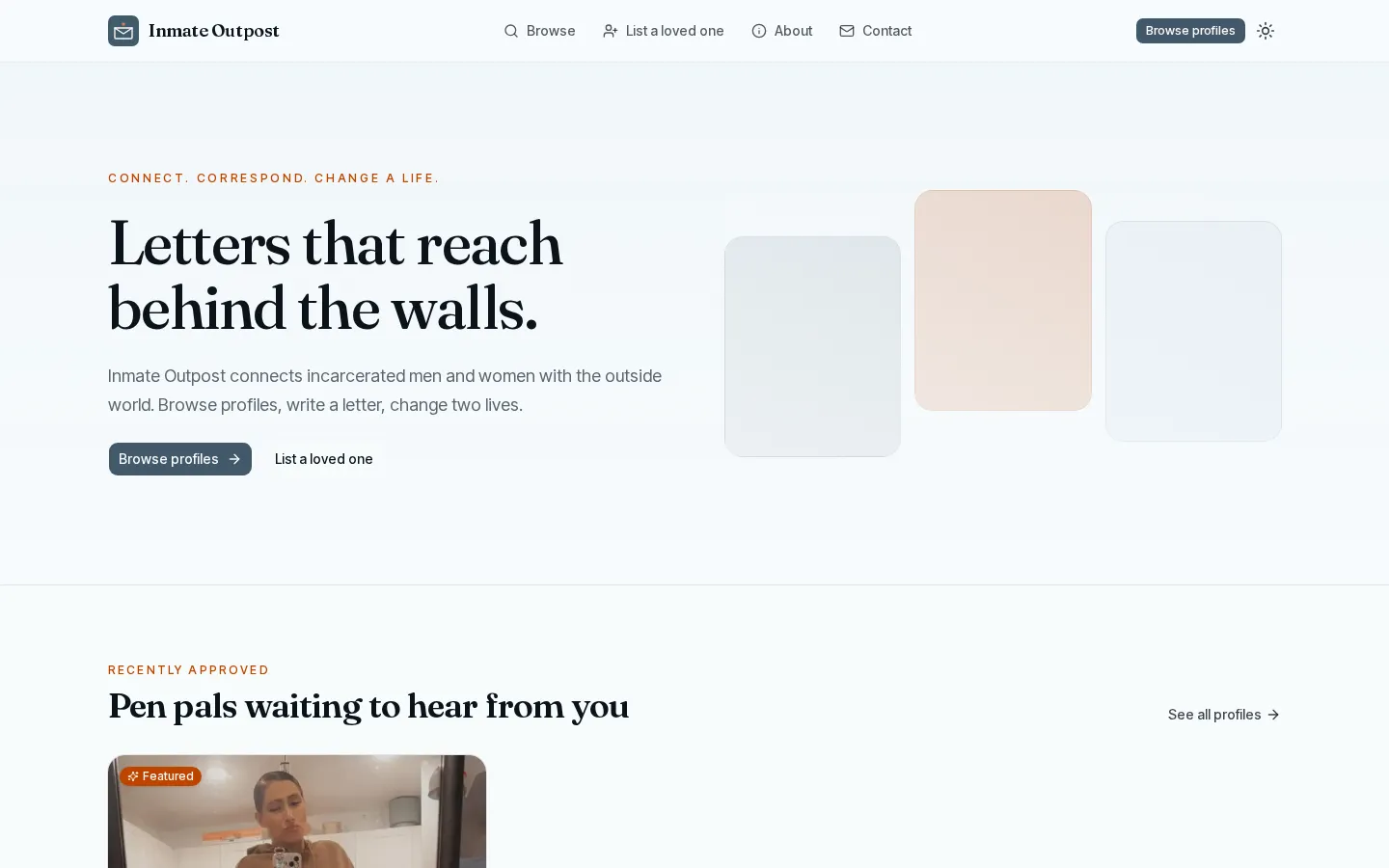
Inmate Outpost — a pen-pal directory that connects incarcerated men and women with people on the outside. A visitor can browse approved profiles, filter to find someone whose interests match their own, and read a real bio before they write. Every profile is checked by a human before it goes live. There’s no account to create and no messaging system in the middle: mail goes directly to the facility on the profile, so a letter is a letter, not a metered platform feature. Families can also list a loved one who wants to receive mail. The whole flow is built around three steps — browse, write, stay in touch — with the correspondence living where it belongs, between two people.
How we shipped it
A Next.js and React front end with Tailwind, backed by Prisma and PostgreSQL, deployed on a single AWS box we run. The codebase is multi-tenant from the ground up — Inmate Outpost is the flagship brand, and the same engine is built to stand up sibling directories without a rewrite. Light and dark themes, mobile-first for a niche where half the traffic is on a phone, and human moderation wired into the publish path so nothing reaches the directory unreviewed.
Outcome
Inmate Outpost is live in production — a calm, honest front door for a hard subject, built to make the next letter easier to send. Like everything we build, the code and the server belong to the owner: no per-message fees standing between people and the people they’re writing to.